Hay Rack or Hay on the Floor? What's Best for Guinea Pigs
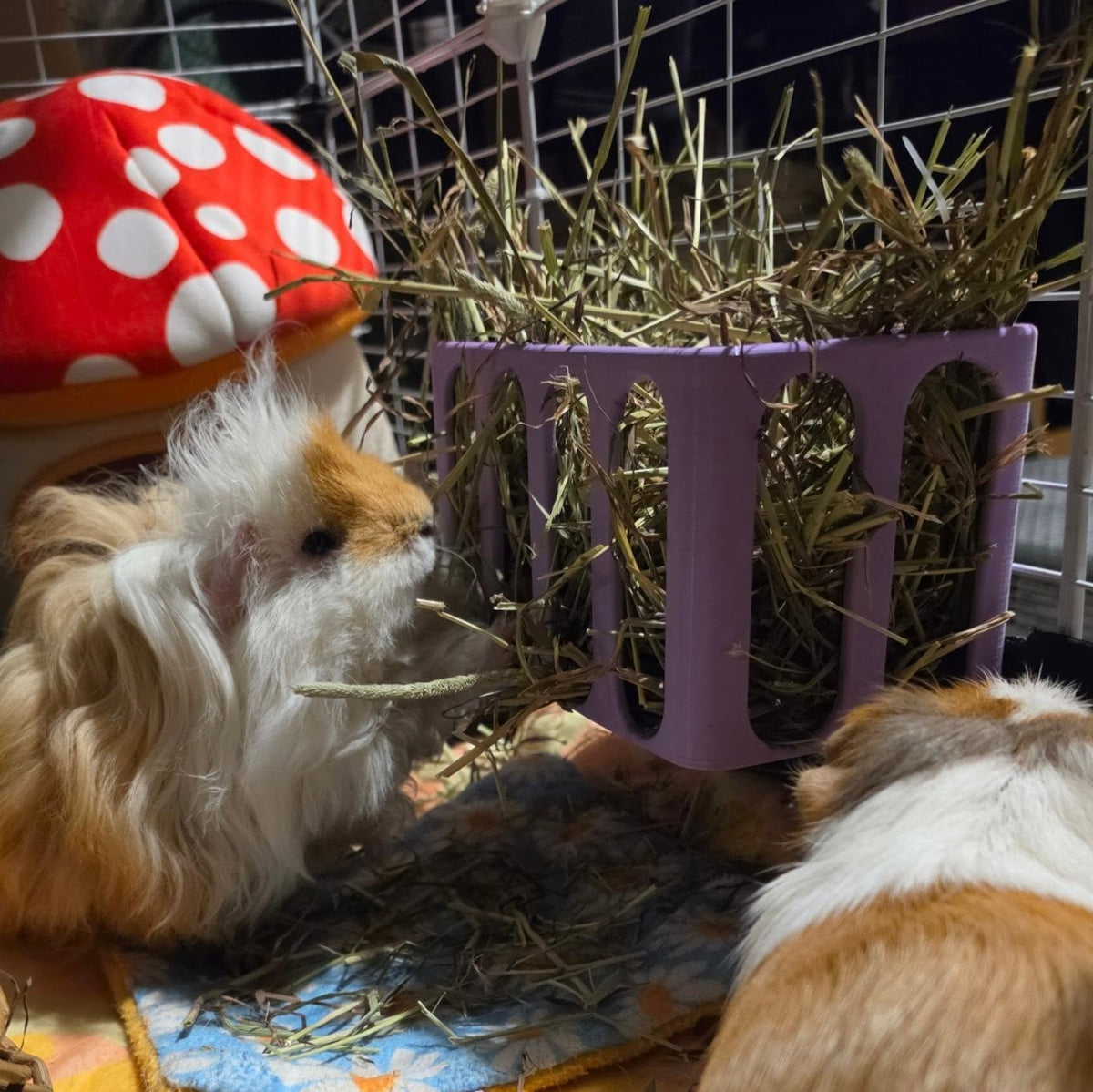
Hay on the floor feels like the natural choice. Guinea pigs and rabbits are grazers, and in the wild their food is on the ground. So why do so many owners end up with a hay rack?
Because the problem with floor hay isn't where it is. It's what happens to it: within a few hours it's been sat on, slept in and weed on, and most guinea pigs won't eat hay that's been soiled. Hay they won't eat isn't doing its job, and hay is the single most important thing in their diet.
The good news is you don't have to pick a side. Here's what each option does well, what to look for in a hay rack, and the simple set-up that gives you the best of both.
In this guide
- The quick answer
- Why hay matters so much
- Hay on the floor: pros and cons
- Hay racks: pros and cons
- What to look for in a hay rack
- The best set-up: where to put it
- Common mistakes
- FAQ
The quick answer
Use both. Keep the main supply of hay in a hay rack, where it stays clean and dry and you can see at a glance how much is left. Then scatter a small handful on the floor or in a dig box every day, so they still get to forage the way they love to.
The rack makes sure there's always clean hay to eat. The floor hay keeps them busy. Neither on its own does both jobs as well.
Why hay matters so much
Hay isn't bedding or a side dish. For guinea pigs and rabbits it's the main meal:
- Guinea pigs should have unlimited hay and grass, according to the PDSA. Guides put it at roughly 80–90% of what they eat.
- Rabbits should get about 85% of their diet from hay or grass, according to the Rabbit Welfare Association & Fund, with a bundle of hay at least as big as themselves every day as an absolute minimum (PDSA).
Constant chewing of hay keeps their ever-growing teeth worn down and their gut moving. That's why the real question isn't "rack or floor?" but "how do I make sure they always have clean hay they'll actually eat?"
Hay on the floor: pros and cons
The good:
- It's natural. Guinea pigs and rabbits graze with their heads down.
- It's great for foraging and rummaging, and it doubles as something to burrow and hide in.
- No equipment needed.
The not so good:
- It gets soiled fast. Guinea pigs often toilet where they eat, and most won't eat hay that's been weed on.
- It's wasteful. Trampled, soiled hay goes in the bin, so you go through bales faster.
- It gets everywhere. Into the fleece, the hideys, the water bowl and your carpet.
- It's hard to tell how much they're eating. If a pig goes off their food (an early sign of illness), it's easy to miss when there's hay all over the floor.
- Damp hay can go mouldy, especially under a drippy bottle.

Hay racks: pros and cons
The good:
- Clean hay, all day. Off the floor means not sat on or weed on, so it actually gets eaten.
- Much less waste, and a tidier cage.
- You can see how much is gone. Refilling becomes a quick daily check, and you'll notice quickly if someone's off their food.
- Pulling hay through the openings slows them down a little and keeps them nibbling, rather than flattening a pile.
The not so good:
- A badly designed rack can be a hazard. Old-style wire racks can have gaps where a head or foot gets stuck, and racks fitted high make pets crane their necks and push their faces into stiff stalks.
- It can run empty. A rack only works if it's topped up, especially overnight.
- Less foraging fun, unless you also scatter some hay (see the quick answer).

What to look for in a hay rack
- No gaps that can trap a head or foot. Avoid racks with wire bars or narrow V-shaped gaps.
- It sits low. Your pets should be able to eat with their heads roughly level, not reaching up into it.
- Big enough to last. It should hold enough hay that it's not empty by morning.
- Easy to refill without taking it off the cage.
- Tough and smooth. No sharp edges, and sturdy enough to survive chewing.
- It fits your cage, whether that's grids, bars or a wall.
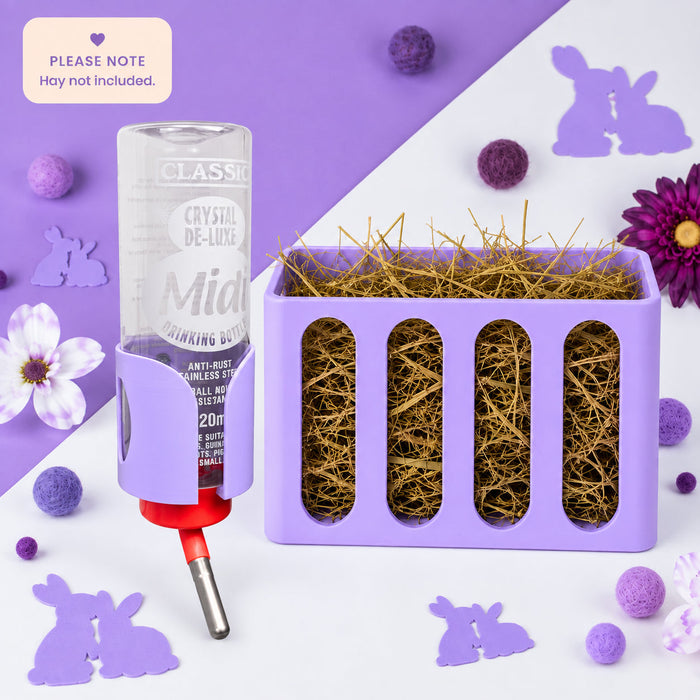
That's the checklist we designed ours around. Our hay rack is printed in one solid piece of PLA, so there are no separate parts to work loose, with deep oval openings for little noses. It measures about 20 × 11 × 11 cm, holds about 2 litres of hay, and fits a cage or a wall with three zip ties.

From us: our own two rabbits, Button and Teacup, free-roam their space under the stairs, so their hay rack is fixed low on the wall rather than to a cage. We fill it generously morning and evening and scatter a handful on the floor for them to rummage through, and far less hay ends up trampled and thrown away.
The best set-up: where to put it
- Low on the side of the cage, with the bottom of the rack a little above the bedding, so they eat with their heads level.
- Next to a hidey. Guinea pigs feel safer eating with cover nearby, so a rack beside a hidey gets used more.
- Near the water, but not under it. They often drink while they eat, but a drip onto the hay will spoil it.
- Over an easy-clean spot. Some hay always falls. A puppy pad or a separate fleece under the rack makes it a two-minute clean.
- One rack per two or three pigs. In bigger groups a second rack stops squabbles.

Common mistakes
- Letting the rack run empty overnight. Fill it generously last thing at night.
- Fitting it too high. If they have to stretch, they'll eat less and get stalks in their eyes.
- Rack only, no foraging. Scatter a handful daily too.
- Storing hay badly. Keep bales somewhere dry and airy, never sealed in plastic while damp, and throw out anything dusty, musty or mouldy.
- Cutting back on hay to reduce mess. Never ration hay. Fix the mess with the set-up, not by giving less.
FAQ
Do guinea pigs need a hay rack?
They don't strictly need one, but a rack keeps hay clean and dry, so they eat more of it and you waste less. Most owners find a rack plus a little floor hay for foraging works best.
Is it OK to put hay on the floor for guinea pigs?
Yes, and it's good for foraging. Just replace it often, because guinea pigs won't eat hay that's been soiled, and don't rely on floor hay as their only supply.
Are hay racks safe for guinea pigs?
Well-designed ones are. Avoid racks with gaps a head or foot could get stuck in, and fit the rack low so they don't have to reach up into it.
Where should a hay rack go in a guinea pig cage?
Low on the side of the cage, next to a hidey, near (but not under) the water bottle, over an area that's easy to clean.
How much hay do rabbits need a day?
Unlimited hay is ideal. As a minimum, the PDSA says a bundle at least as big as the rabbit every day, and the RWAF recommends hay or grass make up about 85% of their diet.
Keep their hay clean, and the floor tidier
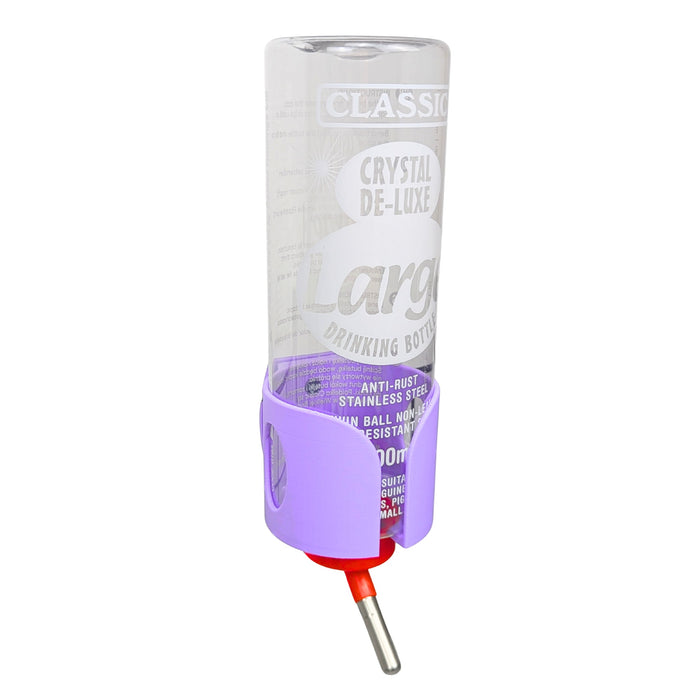
Our hay racks fit cage grids, bars or a wall, come in colours to match your water bottle holder, and are made in Britain. Or get both together in a matching set.
Sources: PDSA guinea pig diet; PDSA rabbit diet; Rabbit Welfare Association & Fund. Customer photos shared with permission.
From the shop
Made for cages like yours
★★★★★ 4.9 from 306 reviews


- Free UK delivery over £22
- Made in Britain
- Won't Go Back guarantee